
Par Gilles Carol
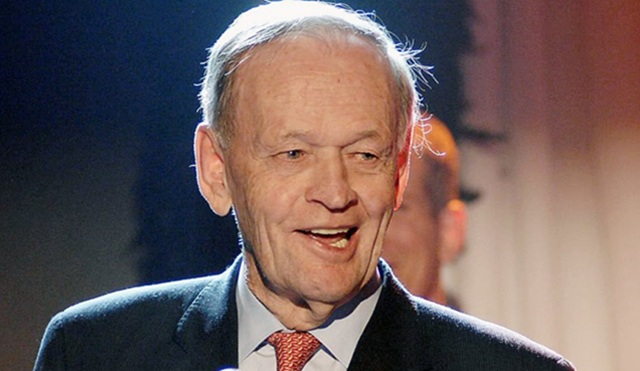
In the beginning, very few though seriously about Canada’s determination to make the development of Africa, first on the agenda at the Kananaskis Summit. The Middle East, Terrorism, Globalization etc., all seem to have been the subjects of discussion, rather than that of the continent. But Prime Minister Jean Chrétien Host of the Summit held sure, following a historic visit to six African countries, and did not change course. Recapping a remarkable year of intense efforts.
Diplomat Investment: Prime Minister, Africans and African leaders greatly appreciated your recent visit to Africa. Can you give us a brief summary of that visit?
Prime Minister Jean Chretien: Four of the countries that I visited, namely Algeria, Nigeria, South Africa and Senegal, are members of the New Partnership for Africa’s Development (NEPAD) Steering Committee. Ethiopia is home of the Organization of African Unity (OAU) and the UN Economic Commission for Africa (ECA) and I had the opportunity to address a joint session of these organizations while in Addis Abeba. President Obasanjo of Nigeria and President Mbeki of South Africa also kindly arranged meetings with eight other regional leaders during my visit. Through the course of my meetings with African leaders, citizens, representatives of non-governmental organizations and the private sector, I gained valuable insight into African perspectives about development on the continent and the unique opportunities and challenges they face.
Thanks to your efforts, Africa will be one of the key agenda items at the next G8 Summit, which will be held in Kananaskis, Alberta, this summer. Meanwhile, for the first time, African countries have drafted plans for Africa’s development which they call the New Partnership for Africa’s Development (NEPAD).
What follow-up do you feel is needed on that initiative? And as the Chair of the G8 Summit, how will you advocate for this project with the other G8 members to ensure NEPAD yields tangible results?
The NEPAD is a unique program of action to end Africa’s economic marginalization that has been developed by African leaders and is endorsed by the 53 members of the Organization of African Unity. As such, it is the first comprehensive plan for African development to have originated in, and be formally supported throughout, Africa.
The G8 already made a commitment to Africa through its imprecedented decision in Genoa to develop the G8 Africa Action Plan. My colleagues agree that the NEPAD offers a new paradigm through which to approach development in Africa. It aims to create the conditions conducive to unlocking greater public and private resources to finance development.
The NEPAD expressly calls for enhanced partnerships with those African countries that are demonstrably committed to good governance and their own economic and social development and poverty reduction strategies. While it calls for more public spending, it also reflects the broader international consensus that has emerged after 50 years of development cooperation that more spending on its own is not a panacea.
We must ensure that these development assistance funds are spent more effectively by, among other things, better coordinating our efforts among donors. We must also ensure that we address the other factors that affect African countries’ ability to generate resources to finance their development.
These include debt relief, greater market access and trade-related technical assistance so developing countries can benefit from trade liberalization.
For our part, the Government of Canada established a $500 million Canada Fund for Africa to support the G8 Africa Action Plan.
Several other G8 partners, including the United States and the European Union, have also announced increases in their official development assistance budgets. Canada has forgiven the development assistance debts of almost all Heavily Indebted Poor Countries, including $1.3 billion for the 34 least developed countrios in Africa, and over $2 billion in other dobt payments. We have also been consulting Canadians on providing improved market access for least developed countries, many of which are in Africa.
Prime Minister, how do you think Canada’s financial communitty can be encouraged to becom more involved under NEPAD in projects to help Africa play a greater role in the global economy?
IIn Canada, a first obstacle no the greater involvement of both the financial community and the private sector in Africa have been a lack of familiarity with the continent and with the successes have been already achieved here by fellow citizens. Mny Cnadian companies have been working in Africa and have commercial-financial success stories to share. They range from small Canadian companies that have found local partners and are working at rehabilitating used machinery, to those who have made multimillion dollar, long term investments. We want our business and financial community to be aware that there are many opportunities in Africa that promise great potential benefit both to the investor and Africans
alike — investment as well as trade opportunities that can lead to technology transfer, skills development as well as new, enviromentally-friendly and socially responsible ways of doing business. Familiarizing people with the potential for investment and trade success is just one part of the equation, however. We all know that investment sources flow freely, and investors avoid taking risks, I am encouraged that this fact is recognized in the NEPAD.
African leaders know they are competing with Asia and Latin Amorica for limited pools of global investment. They have anclared their intent to make them have economies more attractive to
foreign investors and traders. And it is clear what this requires. Business people are attracted to markets that offer predictability, transparency, reliable banking, taxation and judicial systems, regional and national political stability and respect for the rule of law and human rights. Countries which offer these conditions are putting out the welcome mat. And it is not only foreign investors that require this sort of environment.
A supportive business climate is also crucial to enc ourage domestic investment and savings. Capital flight is a significant drain on the resources available for investment at home, the total of which is a very significant sum to many African economies.
Prime Minister, international financial institutions play a key role in African development. How can Canada encourage them to work together under NEPAD with all African stakeholders, both public and private, to lift Africa out of its current marginalized position?
International financial institutions do have a key role to play in helping Africa realize the objectives set out in NEPAD, In fact, the heads of the International Monetary Fund and the World Bank have already publicly committed to put Africa at the center of their agenda and have begun putting these words into practice through increased financing.
Canada has worked hard to ensure that Africa is a priority area for these organizations. An important new mechanism that directly supports the key principles of NEPAD is the country-owned Poverty Reduction Surairs Papers, knows as PRSPs. PRSPs have helped provide strategic framework for recipients to define, in a partipatory way, their approach to poverty and for to coordinate their suport.
Today, direct anti-poverty measures are playing a central role in programs supported by the International Monetary Fund, the World Bank and other lenders, based largely on the priorities set out in each country’s PRSP.
NEPAD also focuses attention on the importance of good governance as a prerequisite for growth, poverty reduction and improved aid effectiveness.
Canada has been an active leader in ensuring that international financial institutions place a stronger emphasis on more effective aid delivery, while recognizing this process entails more than just reducing costs. Achieving results often depends on focusing on countries with a demonstrated commitment to good governance.
We have urged the World Bank in particular to exercise greater selectivity by focusing its work more on good performers, and on investments where we can get strong results. Finally, in addition to providing critical external investment, the international financial institutions play an instrumental role in lobbying for a fairer global economic system, such as the opening of markets, increasing aid volumes and facilitating debt relief for Africa. All of these factors figure prominently in NEPAD.
Prime Minister, in your government’s last budget, you announced the creation of a $500 million fund for Africa. How will that funding be used and what objectives have been set for it?
The Canada Pund for Africa wil be used to support the initiatives oufined in the G8 Africa Action Plun once it has been adopted by G8 Leaders in Kananaskis on June 27, 2002. The Minister for Tatemational Cooperation has been designated Minister responsible for the Canada Fund for Africa, which will be delivered over a three year period. The Fund will help us work in partnership with African countries and organizations, Canadian organizations, and possibly other donor countries to support the objectives of the NEPAD and the G8 Africa Action Plan. The Fund will support African driven initiatives based on their national priorities as defined in their national poverty reduction strategies.
On several occasions during your recent visit to Africa, you emphasized the need for more Canadian companies to be involved in Africa. What tools can Canada make available to Canadian firms to increase their presence in the African market?
The Canadian Trade Commissioner Service has a very strong presence in Africa. They are located in our 22 business development offices across the continent, providing a wide range of services to the Canadian private sector. Staffed by both African and Canadian citizens, they assess market prospects, identify key contacts, provide information on local companies, assist with visits, matchmaking, troubleshooting, and help Canadian firms take advantage of funding available through international financial institutions, among other things. We also have a cadre of Trade Commissioners in Ottawa working full time on promoting and supporting Canada’s business linkages with the continent. Financing and insurance are key components of doing business in Africa. To that end, many Canadian firms have turned to our Export Development Corporation, to the private sector windows of the African Development Bank, the World Bank agencies, as well as private Canadian banks and certain foreign banking institutions.
The Canadian International Development Agency’s Industrial Co-operation Program is another important tool for Canadian firms seeking to invest in Africa.
While the actual investments by Canadian firms are of course at their own cost, CIDA can contribute toward the viability study leading up to the investment, and to cover the costs of the training of staff in the developing country. Each year the CIDA-INC program supports approximately 70 new initiatives by the Canadian private sector in Africa. All of these programs and initiatives taken together help Canadian companies to do business with Africa. I would urge readers who are interested in learning about the full range of tools available to them, to get in touch with the nearest Canadian Trade Commissioner. They have a wealth of Africa business experience and can be reached through your nearest International Trade Centro or at www.infoexport.gc.ca.
During your visit, you also mentioned Canadian market openness to African products as an effective tool in fighting poverty in Africa. How do you intend to follow through on that position?
The Government of Canada has engaged in consultations with Canadians on the possibility of extending duty free and quota free access to exports from the world’s Least Developed Countries (LDCs), including those in Africa. We have proposed to help create opportunities for these countries by encouraging greater private sector flows through trade and investment and solid economic growth. We are now considering the submissions with a view determining what specific actions should be taken.
In closing, Prime Minister, you have made a number of trade missions around the world with Team Canada. Do you foresee a Team Canada mission to Africa in the near future?
We are currently considering a wide range of options on how to build our partnerships with Africa. In Kananaskis, I will be discussing and possibly announcing some of them with the African Leaders who have been invited to participate in our discussions. Our immediate task is to raise awareness among Canadian firms of the potential for business and investment in Africa. I am confident that the successful implementation of NEPAD, with its focus on good governance, will help create the right conditions for business and other partnerships between Canada and Africa.